
- Start
- Rethinking public housing and residualisation
- Public housing in Italy: A case of residualisation
- From adaptive to transformative reuse
- Housing, heritage, policy innovation in Florence
- Transforming a prison into part of the city
- Transformative reuse as housing policy
- Public-led de-residualisation through reuse
- About the author(s)
- References
Published 25.03.2026
Transformative Reuse as Housing Policy
Reclaiming Public Non-Residential Assets to Expand Public Housing in Italy
Keywords: Transformative reuse; public housing; Italy; housing policy; urban regeneration
Abstract:
Public housing in Italy has undergone a process of residualisation, marked by disinvestment, privatisation, and halt in construction, while housing needs have intensified and waiting lists continue to grow. In this context, policy innovation is rare, and the expansion of the public housing stock proves politically and financially challenging. One possible strategy is the transformative reuse of publicly owned non-residential assets – such as former schools, military facilities, or prisons – which can add dwellings while contributing to wider urban regeneration goals. The paper investigates the potential and limits of such an approach, drawing on the case of Florence and in particular the conversion of the former convent-then-prison Le Murate into a mixed-use complex with over 100 public dwellings. The analysis highlights key obstacles and enabling factors and discusses how transformative reuse may contribute to de-residualising public housing and reframing its social meaning.
Rethinking public housing and residualisation
Over the past decade, Italian cities have faced rising housing costs and stagnant incomes, affecting broader groups and putting affordability on local political agendas. Historically, public housing in Italy – construction of which started in the early 20th century – was a segment benefitting working-class and increasingly low-income households, while at the same time contributing significantly to the shaping of the country’s urban fabric. Reaching its greatest surveyed expansion in 1991, public housing now constitutes less than 3 percent of the residential stock (own calculation based on Federcasa 2023), after privatisation was incentivised by national law in 1993. The past decades have moreover seen substantial disinvestment, resulting in an almost complete halt of construction and a growing inability of providers to maintain and retrofit their stock.
The sector has thus undergone a process of residualisation while simultaneously housing needs have intensified, with around 320.000 entitled households on waiting lists (Talluri 2024) and minimal turnover.
Against the backdrop of such complexities and in a context where the regions are primarily responsible for housing policies – and political agendas thus differ widely – expanding the stock is rarely a declared priority, neither at the regional nor at the local level, as consensus and economic means for such a step usually lack. Consequently, policy innovation in the public housing sector is rare, and projects aimed at increasing or regenerating public housing require considerable efforts and extraordinary investments. In some cases, however, unused publicly owned non-residential assets – military facilities, offices, prisons, schools, industrial, or religious buildings – provided opportunities to increase the number of dwellings while also advancing broader urban regeneration goals. In Italy, public authorities (the state, municipalities, regions, provinces, and others) hold ownership of a large real estate stock, comprising buildings and land. A recent survey (Candigliota 2025) reports 1.150.512 buildings owned by public authorities, 77 percent of which are residential and commercial. The remaining 23 percent (266.168) are non-residential assets, among which 21.880 (8 percent) are currently unused. Such assets, I argue, hold potential to be integrated into the residential fabric, contributing to meeting housing needs.
This paper discusses whether – and under which conditions – transformative reuse of publicly owned non-residential assets can be a tool to tackle public housing shortages while also serving broader urban regeneration goals. It seeks to contribute to the literature on public housing in contexts of residualisation (Forrest and Murie 1983; Flynn 1988) and the growing debate on adaptive reuse (Bullen and Love 2011; Lanz and Pendlebury 2022), addressing a research gap by linking two dimensions that so far have not been systematically theorised in relation to one another. The analysis investigates transformative reuse not primarily from a technical perspective but as a tool through which public housing can be reimagined in contexts of structural, multifaceted residuality. It departs from the hypothesis that public non-residential assets can contribute to de-residualising public housing and reshaping its narratives, proposing notions beyond emergency responses. In more detail, I investigate three main questions: What are obstacles and enabling factors of such projects? In what ways might they contribute to de-residualising public housing and reshaping its social meaning? What opportunities do they open with regard to a city’s housing and urban policies?
Empirically, the paper focuses on the case of Florence, Tuscany, one of the few Italian cities to have employed transformative reuse in relation to public housing. Particular attention is dedicated to the most impactful case: the transformation of the 15th-century convent-turned-prison Le Murate, situated in the historic centre, into a mixed-use complex with public spaces, offices, cultural and gastronomic facilities, and over 100 public dwellings. The case of Florence is part of a broader comparative study on the interrelations between public housing and urban regeneration conducted between 2021 and 2024, encompassing five Italian cities (Wolfgring 2024). A shared methodological protocol was applied to all cities, combining academic literature, historical analysis, document analysis (national and regional laws, policy documents, reports, regional and municipal programmes, budgets), empirical material gathered through site visits (processed through maps, field notes, and photographs), and semi-structured interviews conducted with key stakeholders, including public administration officials, housing providers, experts, and civic actors. Florence was selected as a particularly interesting case for various reasons, including the presence of strong market pressure, historically continuous political attention to housing, a proactive public housing provider, and multiple instances of transformation of public, non-residential assets into public housing. The research design supports analytical generalisations to European contexts sharing similar institutional features and public housing trajectories.
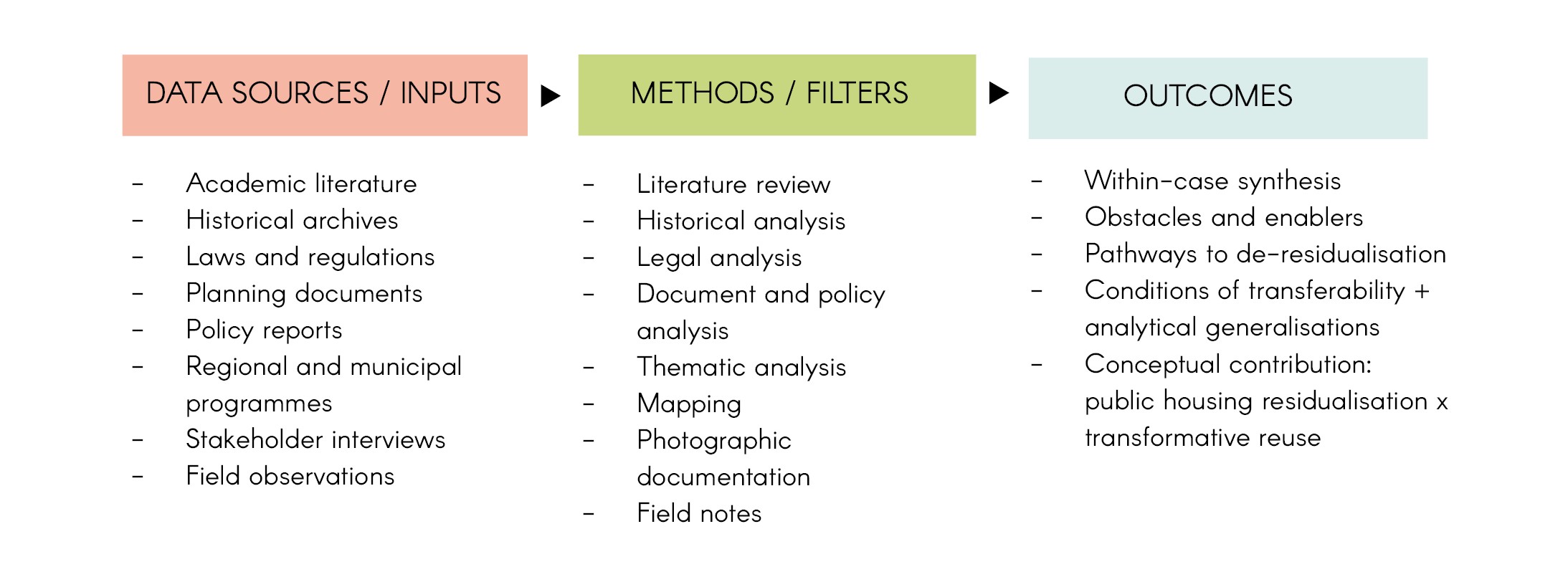
The paper is structured as follows: the first section provides an overview of the state of the art on public housing in Italy, with a focus on the process of residualisation that has taken place in past decades; the second section presents a conceptual framework on transformative reuse, grounded in but going beyond adaptive reuse scholarship; the third section introduces Florence as a city of increased housing pressure; the fourth section outlines the transformation of Le Murate; and lastly, the paper will conclude with a discussion of the wider implications of the case and on how to conceive transformative reuse as (public) housing policy in Italy and beyond.
Public housing in Italy: A case of residualisation
The origins of public housing in Italy can be traced to 1903, when the national Legge Luzzatti established the legal framework for the provision of case popolari through public and charitable actors. In the past 120 years, the sector has undergone successive phases of transformation regarding legislation, production and management, financing, beneficiaries and target groups. Today, the stock amounts to 914.500 dwellings – 2,6 percent of the country’s residential stock (own calculation based on Federcasa 2023) – housing an estimated 2.5 million people (ibid.), 4,2 percent of the population. Ownership is divided between regional public housing providers – so-called Aziende Territoriali per l‘Edilizia Residenziale Pubblica (ATER) – and municipalities (which, however, typically entrust the ATER with the management of their stock). This arrangement results from the devolution of a wide range of competencies and assets from the national to the regional levels, a process that started in the late 1970s and concluded in 2001 (Storto 2018).
The evolution of Italy’s public housing sector since the 1980s can be considered a paradigmatic case of multidimensional residualisation. Residualisation, as Malpass and Murie (1982: 174) state, is “the process whereby public housing moves towards a position in which it provides only a safety net for those who for reasons of poverty, age or infirmity cannot obtain suitable accommodation in the private sector”. According to Pearce and Vine (2014: 658) it “comprises a range of features and influences, but at its heart is about a changing role for social housing.” While housing regimes throughout Europe differ, patterns of residualisation – the contraction of stock, under-investment, tighter targeting, and stigmatisation – have emerged in multiple countries, at differing intensities (Whitehead and Scanlon 2007; Poggio and Whitehead 2017). Within this process, privatisation – including both sales to sitting tenants (as occurred in Italy) and broader asset disposals – has contributed substantially to stock depletion and the transformation of the sector’s social function (Murie 2016; Housing Europe 2024), often interacting with governance fragmentation, fiscal and regulatory shifts, and stricter targeting in line with EU state aid rules (Hoekstra 2017).
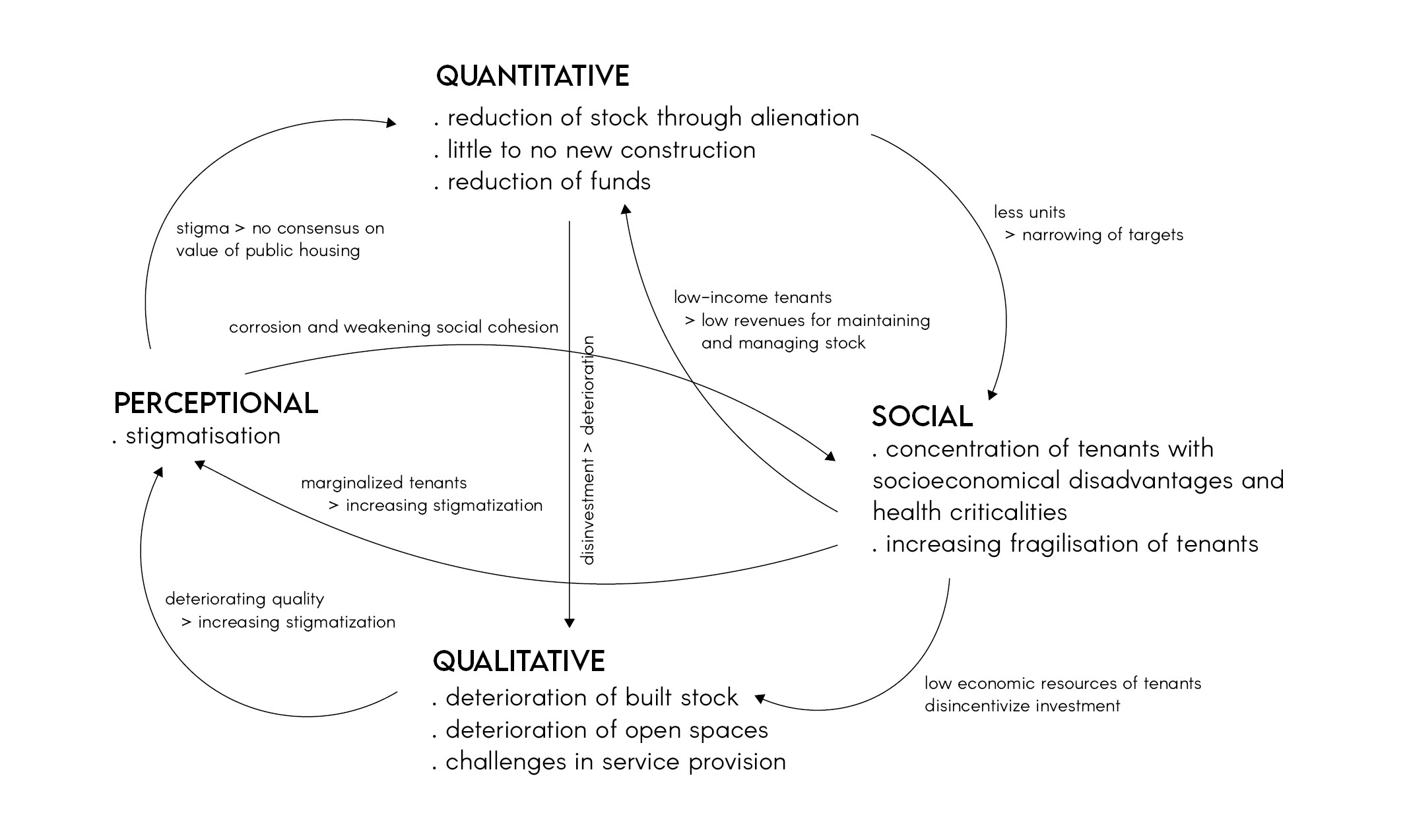
In Italy, residualisation becomes evident in quantitative, qualitative, social and perceptional dimensions, mutually reinforcing each other, as outlined in figure 2 (Wolfgring 2024). Quantitative residualisation was driven by the abolition of the Fondo Gestione Case per i Lavoratori (GESCAL) fund in 1998 – a centralised financing mechanism alimented through workers’ and employers’ contributions (Prevete 2021). This strongly limited the financial leeway of public housing providers, constraining their ability to expand or regenerate their stock, resulting in gradual deterioration and renovation backlog (qualitative residualisation). Privatisation was intended to offset the loss of GESCAL revenues, but the strategy proved insufficient, as dwellings were sold far below market prices (at an average of € 24.000 (Costarelli and Maggio 2021). This resulted in the reduction of around 210.000 units – over 20 percent (Talluri 2022). The contraction further reinforced the need to narrow target groups (social residualisation) – a step initiated in 1981 with the introduction of point lists ranking eligibility by degree of socioeconomic, health-related, or other hardship – with substantial impacts on the social composition of public housing neighbourhoods. With rents linked to the tenants’ income – hence, extremely low, averaging €110 per month (Nomisma and Federcasa 2020) – extraordinary investment in the stock is disincentivised, as structural underfunding undermines economic sustainability. Both the qualitative and social dimensions of residualisation have contributed to an increasing stigmatisation of public housing in public discourse and perception (perceptional residualisation), with negative narratives prevailing both concerning the spaces of public housing and those who inhabit them.
From adaptive to transformative reuse
Throughout the history of the built environment, adaptive reuse was a general practice rather than an anomaly: “Buildings have always been reused for both pragmatic and symbolic reasons. […] the sheer cost and effort of construction has meant that practicality most often dictates the repurposing of edifices for new functional needs or to reflect new architectural fashionabilities, rather than start afresh” (Lanz and Pendlebury 2022: 441). Despite its long history, there is no shared consensus on what adaptive reuse (the most consolidated term on the topic in academic writing) entails. While Pendlebury (2022) states that “Adaptive reuse suggests the change of function of a building or place from one use to another, which requires some level of material change”, other sources understand the term more generously, including practices that involve no transformation of function at all. The International Council on Monuments and Sites (ICOMOS) Burra Charter (2013: 2), for instance, defines adaptation as “changing a place to suit the existing use or a proposed use”. In light of such conceptual broadness, I propose the less common term transformative reuse – which I understand as the reuse of buildings and places explicitly for purposes other than those for which they were built and their (material and non) transformation to accommodate new functions and users. Thereby, I aim to put the focus on the multiple layers of change involved when converting a building: transformation, differently from adaptation, goes beyond the functionalist adjustment of a structure to fit specific needs, emphasising not only physical alterations but also ways in which usage and users, meanings, and the character of spaces are redefined.
Transformative reuse can thus be understood not as a purely functionalist response to new needs, but as a deeper reconfiguration of a built environment. The term moreover intends to move beyond the architectural focus dominating adaptive reuse scholarship, stressing the topic’s wider relevance also for other disciplines such as urban planning, sociology, and geography, and its potential to inform urban policies.
Over the past decades, interest in understanding the potentials and mechanism behind reuse has been rising, driven by a growing awareness of the finiteness of resources (prominently brought to attention by the Club of Rome’s Limits to Growth in 1972) and an increasingly acute recognition of the impacts of anthropogenic emissions. Scholarship on adaptive reuse emerged in the same period, primarily in architecture and conservation. While earlier interest focused on the mapping and description of specific interventions, recent years have seen attempts to approach the topic more conceptually (Lanz and Pendlebury 2022).
Several contemporary investigations (e.g. Mehan 2025; Armstrong et al. 2023; Mohamed et al. 2017) focused on the links between adaptive reuse and sustainability, understood in terms of the triple bottom line, regarding environmental, economic, and social dimensions (Elkington 1997). In environmental terms, great hopes are placed in adaptive reuse. However, while extending the life of existing buildings preserves embodied carbon (Bullen and Love 2011) and avoids emission generated through new construction, life cycle assessments are key to understanding whether renovation or demolition is the more reasonable choice (Zimmermann et al. 2023). Several studies showed that under most conditions, renovation and transformation is ecologically more sustainable than demolition and new construction (Thomsen and van der Flier 2008; De Jonge 2005; Itard and Klunder 2007). Economically, sustainability depends on the specific physical conditions and characteristics of a building, impacting on the cost-benefit ratio of any intervention. The financial feasibility of interventions of adaptive reuse, as Mehan (2025) moreover points out, is constrained by regulatory requirements, such as energy efficiency standards, accessibility provisions, and building codes. There are good grounds for dedicating attention to the topic also from the perspective of social sustainability, a dimension that has so far been less explored.
Sfakianaki and Moutsatsou (2015) developed a decision support tool for weighing adaptive reuse against demolition which incorporates a social-sentimental dimension. Along similar lines, Lundgren (2023) applied the social life cycle assessment (S-LCA) framework (developed for products and organisations) to investigate the social impacts of a case of adaptive reuse. While attention to the social dimension is on the rise, the link between adaptive reuse and housing affordability is still underexplored, particularly regarding the conditions under which it may serve as a tool for public or social housing provision. Ayumu and Ohakawa (2023) discussed financing strategies to increase the economic feasibility of conversions to affordable housing. Ward and Schwam (2022) investigated whether adaptive reuse of commercial real estate can help tackle the housing crisis in Los Angeles, and Sanchaniya et al. (2025) investigated cases of adaptive reuse for age-friendly social housing in Latvia. However, scholarship on the relations between adaptive reuse and housing affordability is scattered and context-specific, with limited integration into wider policy debates. This points to a research gap – certainly so in the Italian context, where, given the manifold complexities outlined, the transformation of publicly owned buildings may represent an opportunity to increase public housing supply. An insightful example of the challenges and potential in transforming publicly owned heritage for public housing purposes is the case of Florence, examined in the following.
Housing, heritage, policy innovation in Florence
Florence is the capital and, with a population of 361.619, most populous city in Tuscany. It experiences strong housing market dynamics, particularly concerning the rental market, with rents (referring to asked prices) growing by 48 percent from 2017 to 2025, reaching an average of € 21,5 (immobiliare.it 2025). This is largely driven by the city’s attractiveness as a tourist destination and the consequent proliferation of short-term rents, increasing rent pressure and reducing the availability of long-term rental housing. With 8.144 units, the public housing stock constitutes 3,9 percent of the city’s residential stock (a value above the national average, but below that of other major cities), accommodating 16.486 persons (4,6 percent of the population; Casa SpA 2024). The near entirety of the stock is owned by the municipality but managed by Casa SpA, the regional public housing provider responsible for the Florentine area.
Both Florence and Tuscany have a strong tradition of left-wing governments, which have shown continuous commitment to housing issues. At the regional level, this is reflected in legal and institutional innovations: the law regulating public housing allows municipalities to assign dwellings in need of retrofitting to tenants willing to undertake such works, with costs offset against rents. It also provides the possibility for self-management through tenant committees in public housing, with financial and social advantages. In 2024, Tuscany moreover adopted a Regional Housing Plan, providing a substantial investment for public housing construction and retrofitting (€ 90 million, in addition to € 93 million in national funds; Regione Toscana 2024a). The document furthermore stipulates the aim to support municipalities in purchasing dwellings through executive procedures for public and social housing purposes. Similarly, in 2022, the region provided € 8 million in European funds for the acquisition of public or private dwellings to increase the regional public housing stock (Regione Toscana 2024b).
At the city level, the attention to housing is reflected in continuous substantial expenditures for public and social housing, amounting to between € 20 and € 23,5 million annually from 2016 to 2021 (Openpolis n. d.). Another notable initiative dates to 1995, when the city secured national and regional funds for renewal and refurbishment within the consolidated city and used them to launch the „Municipal Programme for Building Rehabilitation, Urban Recovery and Urban Redevelopment“ (Melosi 2019). Its innovative character lay in pursuing a threefold goal, linking resources for building refurbishment to the safeguarding of abandoned, publicly owned buildings of cultural-historical or architectural heritage and the expansion of the public housing stock. The programme pursued a model of residenzialità diffusa (ibid.), by punctually distributing public housing within the existing urban fabric and thereby countering its concentration and that of related socioeconomic criticalities. Abandoned buildings of different typologies and sizes, owned by the city, were selected to produce over 140 public dwellings in central and semi-central locations, among which a gasometer, a catholic school, the convent of San Gaggio, a slaughterhouse, a residential building and, lastly, the former convent-then-prison Le Murate (90 dwellings + 23 beds in a collective residence; Comune di Firenze 1999; Figure 3). Funds invested in the smaller projects combined amounted to € 12,5 million, while the Murate project required an investment of over € 42 million (ibid.), with another € 11 million allocated for an additional lot (Casa Spa 2020). Among these interventions, the transformation of Le Murate is noteworthy not just for its scale, but also for its governance and complexity, as outlined in the following.
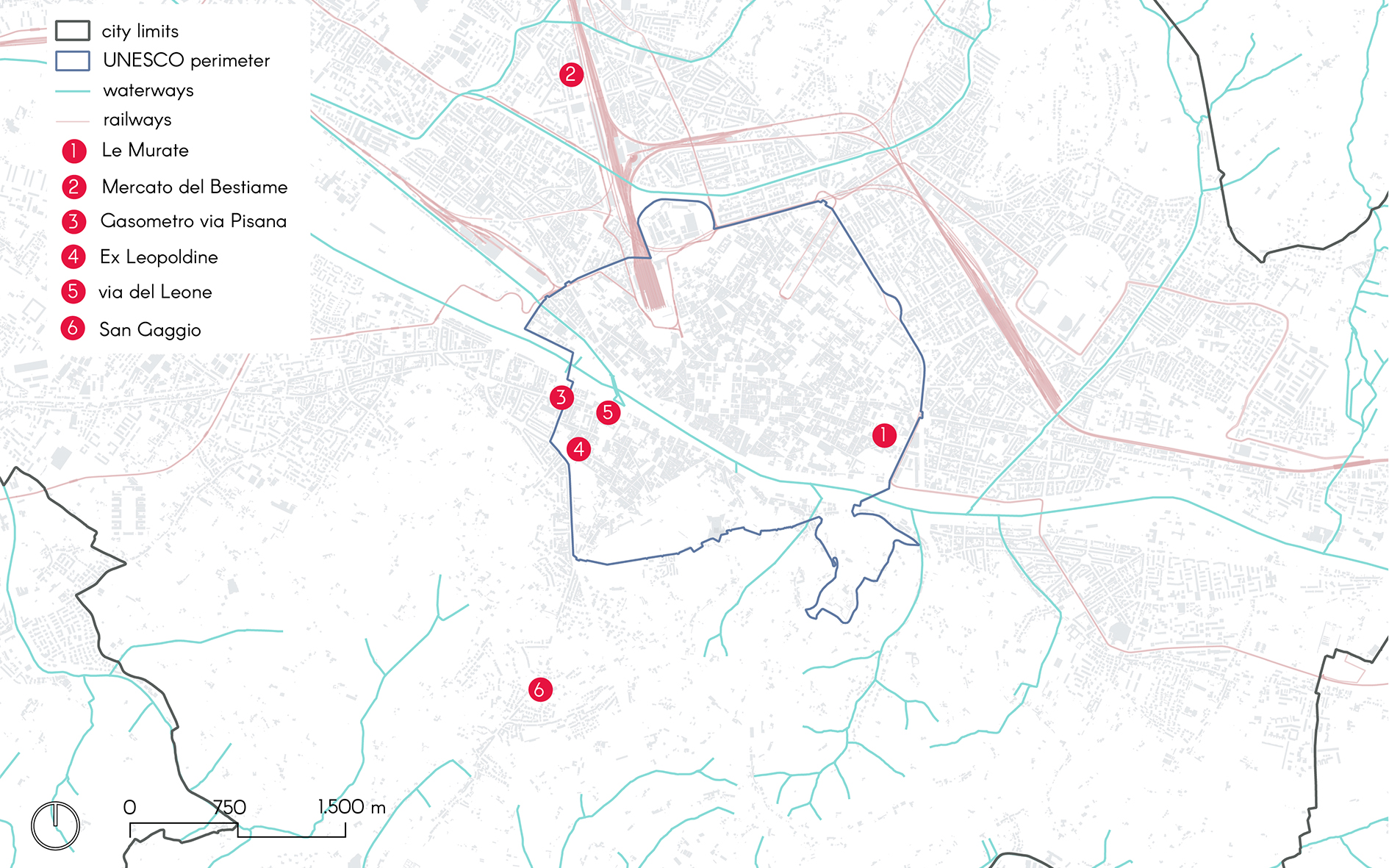
Source: Constanze Wolfgring.
Source: Constanze Wolfgring.
Transforming a prison into part of the city
Le Murate was built as a Benedictine convent in the 15th century – a function it maintained for over four centuries, until its conversion into a prison in 1883 and abandonment a hundred years later (Esposito 2019). The complex, situated in the city’s UNESCO World Heritage Site, covers an area of 3 hectares in Santa Croce, located within a 15-minute walk of the main cathedral, Santa Maria del Fiore. Santa Croce, inhabited by working-class and low-income populations in the early 20th century, had been subjected to large-scale sanitation works in the 1920s and 30s, resulting in the expulsion of these groups (Pierini 2001). After the decommissioning of the prison in the 1980s, ownership was transferred to the city by the Ministry of Justice, in exchange for land in the western district of Sollicciano. The city launched an international idea competition in 1985 – of 161 proposals, ten were considered for further investigation (Esposito 2019). The project remained on hold until 1997, when the Programme for Building Rehabilitation adopted two years earlier created a window of opportunity for funding the endeavour. The regeneration project was approved by the city council in 1998 and foresaw its transformation into a mixed-use complex entailing public, cultural, commercial, and office uses, and 90 public dwellings, to be implemented in phases (ibid.). While originally five lots were envisaged, a sixth was added in 2017, resulting in the creation of another 16 units (Casa SpA 2020).
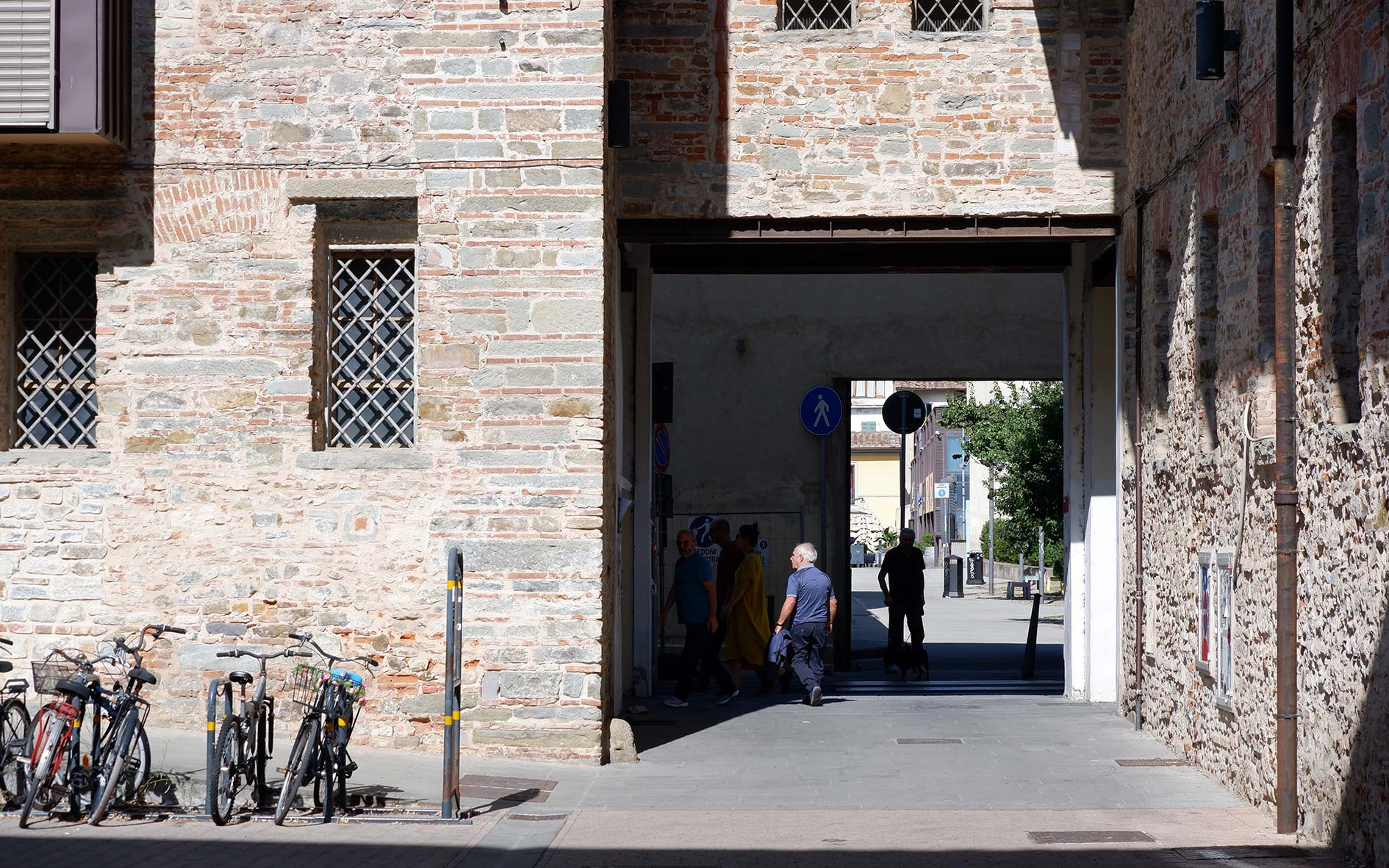
Throughout its realisation, the project displayed peculiarities, challenges, and innovations in planning, governance, architectural and social terms. A noteworthy element has been the development of a conceptual unitary project predating the implementation through the city’s public housing office with architect Renzo Piano, who acted on behalf of the UNESCO as Ambassador of Good Will for Architecture and Urbanity. It defined guidelines and organising principles for the subsequent design phases (Comune di Firenze n. d.). Among these were the acknowledgement of the site’s history as a prison as an element to be addressed rather than concealed, and the creation of an environment characterised by permeability and accessibility, countering the fact that the site – while situated in the very heart of the city – had been closed to the public and acting as a barrier in the urban fabric for five centuries. The unitary project stressed the importance of multifunctionality while also promoting a stratification of uses, envisioning an interplay with the city through public ground-floor functions, while designating the first floor for tertiary uses and safeguarding privacy in the upper levels (Figure 4; Melosi 2019).
With the first lot completed in 2004 and works on the recently added sixth lot scheduled for completion in 2026, the project spans over two decades. It involved five city administrations (centre-left coalitions) with, at the forefront, the public housing office (responsible for the project design) and Casa SpA, acting as procuring station and managing the dwellings. The project is thus a strictly public endeavour – financed entirely with public funds, carried out under public governance, designed and directed by public employees. While such a model allows to pursue public interests and objectives of the common good, it requires sustained political commitment over an extended time and thus a certain political stability as well as continuity of funding – risks partly mitigated by the decision to implement the project incrementally.
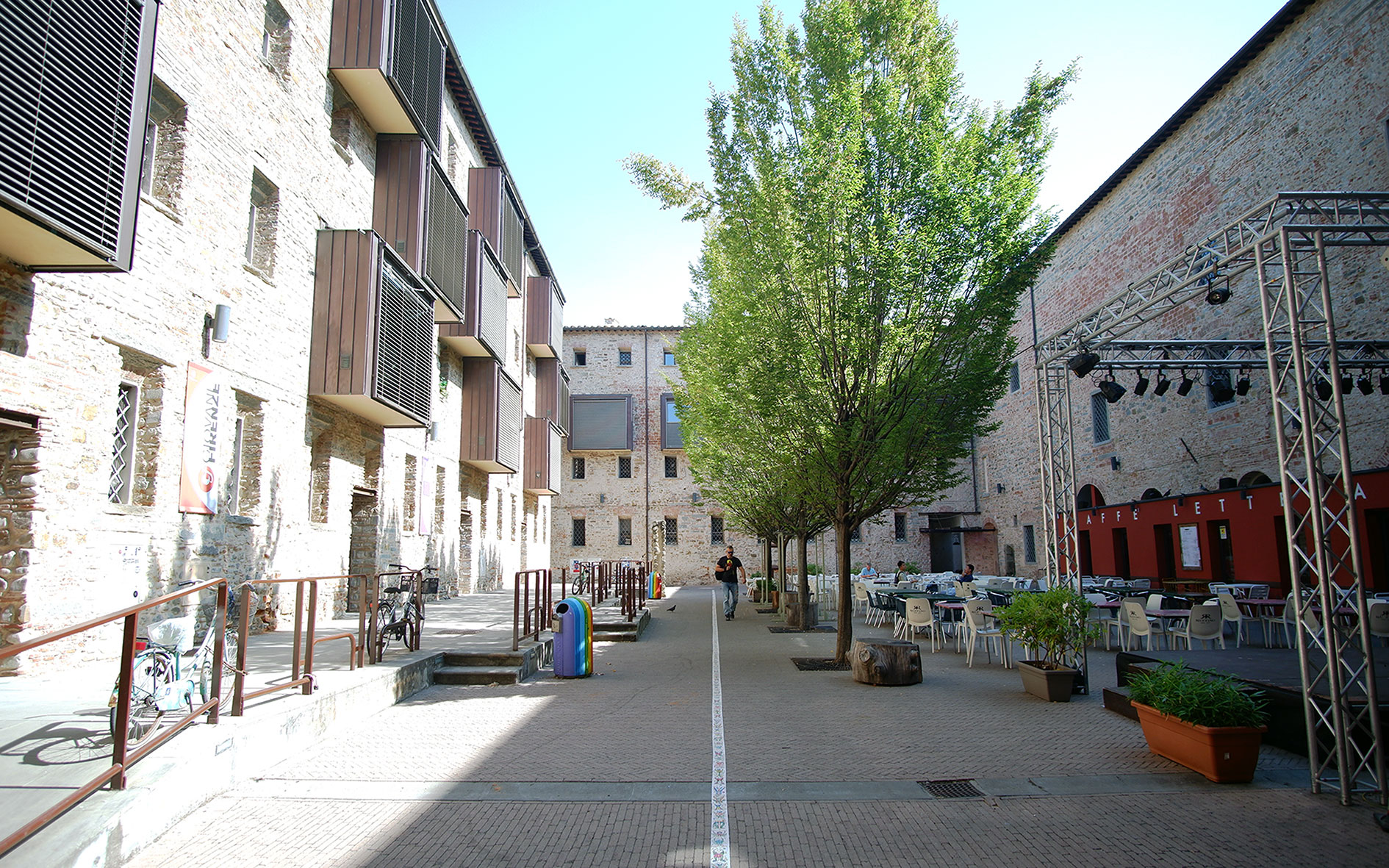
Architecturally, the case is insightful as a rare example of a prison transformed to housing, entailing material and immaterial complexities. The prison typology – with small windows, narrow distribution spaces, and cells as core units – posed architectural constraints, amplified by the building’s heritage status. This translated to higher costs, requiring a deviation from legal stipulations, which had to be approved by the Ministry for Public Works and the region (Esposito 2019). In immaterial terms, prisons, as forms of “difficult cultural heritage” (Lanz 2018), call for an equilibrium between conservation and transformation – a central objective in the case of Le Murate. Instead of erasing traces of the original function, the intervention retained selected elements as reminders of the building’s past, including wooden cell doors and external corridors as distributive elements (Figure 5 and 6; Esposito 2019).
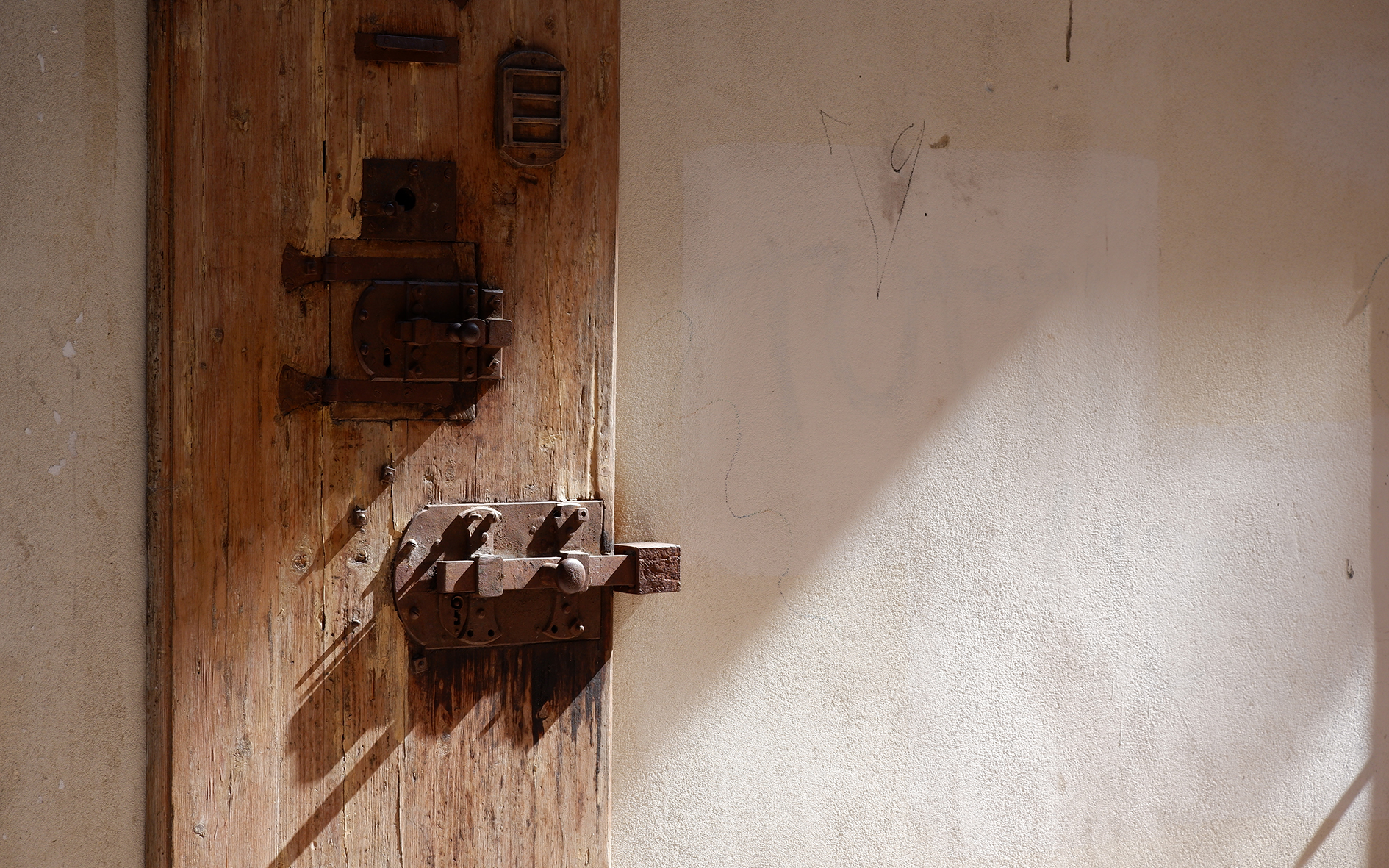
In social terms, the project stands out for two main reasons: by adding over 100 public dwellings to the city’s stock in the historic centre – an area marked by housing pressure and touristification – it restores a more equitable distribution of housing patterns in a neighbourhood from which low-income populations had been expelled a century earlier. Secondly, the intervention opened an urban block closed for centuries, transforming it into a point of attraction and reference for the public, where culture, arts, gastronomy and public offices exist next to housing, creating a permeability that previously hadn’t existed.
Transformative reuse as housing policy
The investigated case allows to draw broader lessons on whether and how transformative reuse of publicly owned non-residential assets can be a tool to tackle public housing shortages while serving broader urban regeneration goals. By revealing obstacles and enabling factors – most of which are not unique to the Italian case – it provides an entry point to discuss structural challenges and possibilities of transformative reuse as housing policy in Italy and beyond. Specifically, the case points to the following crucial levers to facilitate transferability: (i) availability of public assets; (ii) financing; (iii) actor capacities and commitment; (iv) regulatory facilitation; and (v) public governance and steering.
First and foremost, conceiving transformative reuse as housing policy presupposes not only the existence but also the effective availability of unused public assets – as the Murate case shows, public doesn’t equal accessible, and fragmented public ownership (common across Europe) requires negotiation over transfers or usage agreements within context-specific legal frameworks. Secondly, in the absence of a stable funding mechanism, financing remains one of the main obstacles in a structurally underfunded sector – a challenge several European countries share. Access to extraordinary resources is thus a key condition of transferability. While the European Union can play a key role by earmarking funds for renovation and/or the increase of public housing, the ability, preparedness, and political will of actors to identify and intercept such opportunities vary across countries, regions, and cities, highlighting the parallel need for capacity building, institutional learning, and policy transfer. Architectural and technical complexities in transforming non-residential typologies are moreover a hampering factor independent of context, further amplified in the case of heritage buildings. Here, Italy, rich in historical heritage and expertise in dealing with it, provides valuable lessons. As the Murate case showed, regulatory rigidity complicates implementation, requiring technical workarounds and often translating to higher costs. Regulatory flexibility (such as targeted derogations or simplified procedures) – where justified by social or ecologic outcomes – along with specific financing mechanisms, are thus necessary conditions to support feasibility.
Multilevel governance proves challenging across Europe, as political agendas, time horizons and priorities are often misaligned, and relations between actors are not always constructive. This becomes even more complex in the case of long-term projects, requiring years or decades of shared commitment. The Murate case demonstrates that if political commitment is sustained over time and supported by competent administrative and technical actors, good practices prioritising collective interests can emerge. Durable and cross-party consensus should be grounded in framing such interventions around shared and uncontentious aims – such as value creation for the wider public – rather than around partisan political objectives. A qualifying element is thus strong public governance. The innovation lay in both the capacity to secure extraordinary funds for renovation and their alignment with a broader housing and heritage policy framework, and the balancing of incrementalism and stability: phasing reduced the risk of overburden, while stability in objectives and principles – defined at a conceptual level – and in governance, with a public steering body, provided coherence throughout.
Public-led de-residualisation through reuse
The Florence case demonstrates that transformative reuse can contribute to the de-residualisation of public housing: the city’s approach not only led to an increase of supply but delivered high-quality dwellings in central areas within heritage sites, attributing significant symbolical value to public housing. By reaccommodating low-income groups in the centre and fostering social mix in prestigious areas, the interventions provided – at a small but symbolically relevant scale – a counterpoint to the peripherality and stigma associated with public housing. By demonstrating that public housing can be of decent quality and compatible with multiple urban functions – generating services and value for citizens – the case illustrates that meanings and narratives of public housing can be reframed towards a more positive and integrated urban role. Despite the specificities of the case, this illustrates a wider takeaway, namely that the infusion of public housing with quality and immaterial values can be effective levers against stigmatisation. The Florentine experience thus shows how publicly owned non-residential assets can become strategic tools to tackle quantitative housing shortages and qualitative urban challenges by valorising built heritage, improving liveability, and introducing new neighbourhood qualities.
Publicness is crucial in this picture – starting from public ownership, which allows to expand public housing without the costs and constraints of land acquisition, offering also strong arguments in terms of sustainability goals.
Le Murate sets a strong case for public-led projects at a time in which urban regeneration is typically outsourced to public-private partnerships or market actors, often to the disadvantage of collective civic interests. While each reuse project poses a unique combination of challenges, the underlying approach – to mobilise public heritage of various types and scales and put it to public use – can be transferred to other contexts (Italian and non-Italian), where un- or under-used public property exists. Premising that each public property should serve the common good, the upscaling of individual good practices and the strategic incorporation of the lessons they provide can open pathways for expanding the margins of manoeuvre in public housing and for de-residualising the sector as a whole.
References
Armstrong, Gillian; Wilkinson, Sara and Cilliers, Elizelle J. (2023): A framework for sustainable adaptive reuse: understanding vacancy and underuse in existing urban buildings. In: Frontiers in Sustainable Cities, 5: 985656.
Ayumu, Mark T. and Ohakawa, Tochi C. (2023): Adaptive Reuse Financial Strategies: Converting Underutilized Commercial Properties into Affordable Housing. In: International Journal of Multidisciplinary Research and Growth Evaluation, 4, 1200–1206.
Bullen, Peter A. and Love, Peter E. (2011): Adaptive reuse of heritage buildings. In: Structural Survey, 29(5), 411–437.
Candigliota, Giovanni (2025): Immobili pubblici: Patrimonio da valorizzare. Maggio 2025. Fondazione Eurispes. Istituto di Studi Politici, Economici e Sociali.
Casa SpA (2024): unpublished data, received by Luca Talluri, president of Casa SpA, in 2024.
Casa SpA (2020): Nuove costruzioni e recupero edilizio. https://www.casaspa.it/nuove-costruzioni/, Accessed: 30.09.2025.
Comune di Firenze (1999): Ufficio programmazione edilizia residenziale pubblica. Progetto obiettivo 1998. http://wwwext.comune.fi.it/comune/organi/progetto/prog.htm, Accessed: 30.09.2025.
Comune di Firenze (n. d.): Le Murate. https://cultura.comune.fi.it/leMurate, Accessed: 28.09.2025.
Costarelli, Igor and Maggio, Michele (2021): Il welfare abitativo italiano. Un’analisi delle normative regionali del decennio 2008-2018. In: Rivista Italiana di Politiche Pubbliche, no. 2, 295–329.
De Jonge, Theo (2005): Cost effectiveness of sustainable housing investments. Delft: DUP Science.
Elkington, John (1997): Cannibals with Forks: Triple Bottom Line of 21st Century Business. Oxford: Capstone Publishing Ltd.
Esposito, Vincenzo (2019): L’edilizia residenziale pubblica motore del recupero delle Murate. In: Esposito, Vincenzo (ed.), Recuperare le Murate. Da carcere a città. Firenze: Aión Edizioni, 13–21.
Federcasa (2023): Presentazione aziendale. Competenze, scelte, protagonisti. Settembre 2023. Effe Magazine.
Flynn, Rob (1988): Political Acquiescence, Privatisation and Residualisation in British Housing Policy. In: Journal of Social Policy, 17, 3, 289–312.
Forrest, Ray and Murie, Alan (1983): Residualization and Council Housing: Aspects of the Changing Social Relations of Housing Tenure. In: Journal of Social Policy, Vol. 12(4),
453–468.
Hoekstra, Joris (2017): Reregulation and residualization in Dutch social housing: A critical evaluation of new policies. In: Critical Housing Analysis, 4(1), 31–39.
Housing Europe (2024): The Sale of Social and Public Housing in Europe. Brussels: Housing Europe Observatory.
ICOMOS (International Council on Monuments and Sites) (2013). The Burra Charter. The Australia ICOMOS Charter for Places of Cultural Significance. https://australia.icomos.org/wp-content/uploads/The-Burra-Charter-2013-Adopted-31.10.2013.pdf, Accessed: 05.03.2026.
Immobiliare.it (2025): Quotazioni immobiliari nel comune di Firenze. https://www.immobiliare.it/mercato-immobiliare/toscana/firenze/, Accessed: 06.03.2026.
ISTAT (Instituto Nazionale di Statistica) (1995): Popolazione e abitazioni. Fascicolo nazionale. Italia. 13. censimento generale della popolazione e delle abitazioni. 20 ottobre 1991. Roma: ISTAT.
Itard, Laure C.M. and Klunder, Gerda (2007): Comparing environmental impacts of renovated housing stock with new construction. In: Building Research & Information, 35(3), 252–267.
Lanz, Francesca (ed.) (2018): Patrimoni inattesi. Riusare per valorizzare. Ex-carceri: pratiche e progetti per un patrimonio difficile. Siracusa: Lettera Ventidue.
Lanz, Francesca and Pendlebury, John (2022): Adaptive reuse: a critical review, The Journal of Architecture, 27: 2-3, 441–462.
Lundgren, Rebecka (2023): Social life cycle assessment of adaptive reuse. In: Buildings and Cities, 4(1), 334–351.
Malpass, Peter and Murie, Alan (1982): Housing policy and practice. London: Macmillan.
Mehan, Asma (2025): Adaptive reuse as a catalyst for post-2030 urban sustainability: rethinking industrial heritage beyond the SDGs. In: Discover Sustainability, 6: 598, 1–21.
Melosi, Roberto (2019): Abitare un carcere. Far diventare città un’antica prigione, una grande sfida. In: Esposito V. (ed.), Recuperare le Murate. Firenze: Aión Edizioni, 25–35.
Mohamed, Rayman; Boyle, Robin; Yang, Allan Y. and Tangari, Joseph (2017): Adaptive reuse: a review and analysis of its relationship to the 3 Es of sustainability. In: Facilities, 35, 138–154.
Murie, Alan (2016): The Right to Buy? Selling off Public and Social Housing. Bristol: Policy Press.
Nomisma and Federcasa (2020): Seconda edizione dell’osservatorio di Edilizia Residenziale Pubblica. Unpublished presentation.
Openpolis (n. d.): I bilanci di tutti i comuni italiani. https://openbilanci.it/, accessed on 12.07.2024.
Pearce, Jen and Vine Jim (2014): Quantifying residualisation: the changing nature of social housing in the UK. In: Journal of Housing and the Built Environment, 29(4), 657–675.
Pierini, Roberto (2001): La città distante. Piani e progetti di edilizia residenziale pubblica. Pisa: Edizioni ETS.
Poggio, Teresio and Whitehead Christine (2017): Social housing in Europe: legacies, new trends and the crisis. Critical Housing Analysis, 4(1), 1–10.
Prevete, Chiara (2021): L’edilizia popolare come servizio pubblico oggi. Un’analisi comparativa tra l’Italia e l’Inghilterra. Doctoral thesis, Sapienza Università di Roma.
Regione Toscana (2024a): Finanziamenti per interventi in materia di edilizia residenziale pubblica. https://www.regione.toscana.it/-/finanziamenti-per-interventi-in-materia-di-edilizia-residenziale-pubblica, Accessed: 30.09.2025.
Regione Toscana (2024b): Avviso per individuazione di immobili di proprietà di soggetti pubblici o privati. https://www.regione.toscana.it/-/avviso-per-individuazione-di-immobili-di-propriet ProzentC3 ProzentA0-di-soggetti-pubblici-o-privati, Accessed 12.07.2024.
Sanchaniya, Rashmi J.; Černeckiene, Jurgita; Gudumasu Naga S. and Kundzina, Antra (2025): Adaptive property reuse for social housing: Benefits, challenges, and best practices. In: Baltic Journal of Real Estate Economics and Construction Management, 13, 1–9.
Sfakianaki, Eleni and Moutsatsou, Katerina (2015): A decision support tool for the adaptive reuse or demolition and reconstruction of existing buildings. In: International Journal of Environment and Sustainable Development, Vol. 14, No. 1, 1–19.
Storto, Giancarlo (2018): La casa abbandonata. Il racconto delle politiche abitative dal piano decennale ai programmi per le periferie. Roma: Officina Edizioni.
Talluri, Luca (2024): L’edilizia sociale pubblica come strumento di cambiamento delle città. https://www.dite-aisre.it/ledilizia-sociale-pubblica-come-strumento-di-cambiamento-delle-citta/, Accessed: 30.09.2025.
Talluri, Luca (2022): La sfida dell’abitare sociale in Italia. Aumentare il numero di alloggi ERP rigenerando le città e rinnovando la gestione. In: Delera A., Ginelli E. (eds.), Storie di quartieri pubblici. Progetti e sperimentazioni per valorizzare l’abitare. Sesto San Giovanni: Mimesis Edizioni, 25–42.
Thomsen, André and van der Flier, Kees (2008): Replacement or reuse? The choice between demolition and life cycle extension from a sustainable viewpoint. ENHR 2008 conference paper. https://repository.tudelft.nl/record/uuid:a670a506-74e6-4c4e-b7b6-71107fb9778d, Accessed: 22.09.2025.
Ward, Jason M. and Schwam, Daniel (2022): Can Adaptive Reuse of Commercial Real Estate Address the Housing Crisis in Los Angeles? Research Report. Rand Corporation.
Whitehead, Christine and Scanlon, Kathleen (eds.) (2007): Social housing in Europe. London: London School of Economics and Political Science.
Wolfgring, Constanze (2024): Regenerating Public Housing, Regenerating Cities. Trieste, Bologna, Firenze, Bari, Catania. Dissertation, Politecnico di Milano, Department for Architecture and Urban Studies.
Zimmermann, Regitze K.; Barjot, Zoé; Rasmussen, Freja N.; Malmqvist, Tove; Kuittinen, Matti and Birgisdottir, Harpa (2023): GHG emissions from building renovation versus new-build: incentives from assessment methods. In: Buildings and Cities, 4 (1), 1–16.